
Views: 0 Author: Site Editor Publish Time: 2025-10-20 Origin: Site


Cold drawing is a crucial process in manufacturing high-precision components. Did you know that cold drawing can significantly improve material strength and surface finish? In this article, we will explore the process of cold drawing, its different names, and how cold drawing machines contribute to creating high-performance parts. You’ll learn how this technique is used across various industries and its importance in meeting exacting tolerances and enhancing material properties.
Cold drawing is a metalworking process where materials, such as steel, copper, aluminum, and alloys, are drawn through a die at room temperature. Unlike hot drawing, which involves heating the material to make it more pliable, cold drawing strengthens the material by enhancing its tensile strength and hardness. This technique is often used to shape rods, wires, tubes, and bars into precise dimensions, resulting in materials with improved mechanical properties. Cold drawing allows for the creation of components that are more durable and resilient, making it highly valuable in sectors requiring high-performance materials.
The process of cold drawing begins by lubricating the material and pulling it through a precisely sized die. As the material passes through, its cross-sectional area decreases while its length increases. This operation refines the internal grain structure of the material, enhancing its strength, toughness, and overall durability. Cold drawing is particularly important when precision is a priority, as it ensures that the material maintains strict dimensional tolerances while improving its overall mechanical properties.
Cold drawing is sometimes referred to as "cold forming" or "cold pulling," especially when dealing with non-metallic materials or continuous processes. "Cold forming" is a broader term that encompasses various processes, including cold drawing, where materials are shaped without the application of heat. In some manufacturing contexts, "cold pulling" may be used interchangeably with cold drawing, particularly when wire or rod-like materials are involved, as the term better describes the pulling motion applied during the process.
Cold drawing is frequently compared to hot drawing and plastic drawing. Unlike cold drawing, hot drawing requires heating the material to make it more pliable, which can be beneficial for materials that are difficult to deform at room temperature. However, hot drawing typically results in a less precise finish and weaker mechanical properties than cold drawing. On the other hand, plastic drawing is primarily used for non-metals, such as polymers, and differs significantly in terms of both the materials used and the mechanical properties it produces. Cold drawing, by contrast, offers better control over dimensions and provides stronger, more durable materials, making it the preferred choice in many industries.

One of the most significant advantages of cold drawing is the improvement in the material's mechanical properties. The process results in a substantial increase in tensile strength and hardness while maintaining the material's ductility. As the material is drawn through the die, its internal structure becomes more aligned, improving its resistance to stress and wear. These enhanced properties make cold-drawn materials ideal for applications where strength, durability, and performance are critical, such as in high-stress automotive or aerospace components.
Cold drawing is renowned for its ability to produce materials with exceptional dimensional accuracy. The precise control over the size and shape of the material during the drawing process ensures that the final product meets the required specifications with tight tolerances. This precision is especially important in industries where even the smallest variation in size can compromise performance or safety, such as in medical devices, aerospace parts, and high-performance automotive components. For example, cold-drawn wires used in electrical systems must adhere to strict dimensional guidelines to ensure efficient and safe electrical transmission.
Property | Cold Drawing | Hot Drawing | Plastic Drawing |
Temperature | Room temperature | High temperature | Varies (higher temp) |
Material Strength | High strength, increased hardness | Lower strength | Lower strength |
Precision | High precision | Lower precision | Moderate precision |
Surface Finish | Excellent surface finish | Rough surface finish | Moderate surface finish |
Applications | Metals (steel, copper, aluminum) | Metals requiring pliability | Non-metals (polymers) |
The primary distinction between cold drawing and hot drawing lies in the temperature at which the process occurs. In hot drawing, the material is heated to make it more flexible and easier to form. While this method can be advantageous for certain materials, it often results in a less precise finish and weaker mechanical properties compared to cold drawing. Cold drawing, on the other hand, is performed at room temperature, which allows the material to retain its inherent strength and provides superior surface finishes, making it more suitable for applications requiring high-performance materials.
Plastic drawing, primarily used for polymers and non-metals, involves a different approach compared to cold drawing. In plastic drawing, the material is deformed at higher temperatures, and the process is less concerned with achieving superior mechanical properties. Cold drawing, in contrast, is focused on achieving higher strength, better dimensional accuracy, and more robust mechanical properties in metals. These differences make cold drawing the preferred method for shaping metals that require superior durability and performance.
Material | Key Properties | Common Applications |
Steel | High strength, versatile | Automotive components, structural parts |
Copper | Excellent conductivity, corrosion resistance | Electrical systems, plumbing |
Aluminum | Lightweight, corrosion-resistant | Aerospace, automotive, packaging |
Brass | High machinability, corrosion resistance | Electrical connectors, musical instruments |
Cold drawing is typically performed on materials that can withstand the mechanical stresses involved in the process without losing their desired properties. Common metals used for cold drawing include:
● Steel: Steel is one of the most widely used materials in cold drawing due to its strength, versatility, and ability to withstand the high stresses involved in the process.
● Copper: Copper is favored in electrical applications due to its excellent conductivity and resistance to corrosion.
● Aluminum: Known for being lightweight and corrosion-resistant, aluminum is a popular choice in the aerospace and automotive industries.
These metals are particularly well-suited for cold drawing because they provide a balance of strength, flexibility, and resistance to wear and corrosion, making them ideal for a wide range of applications.
Selecting the right material for cold drawing depends on the specific requirements of the end product. For example, high-strength steels are ideal for parts that need to withstand high mechanical stress, while copper is the go-to material for components that require high electrical conductivity. Aluminum, being lightweight and corrosion-resistant, is often used in industries where these properties are essential, such as in aerospace and automotive manufacturing.
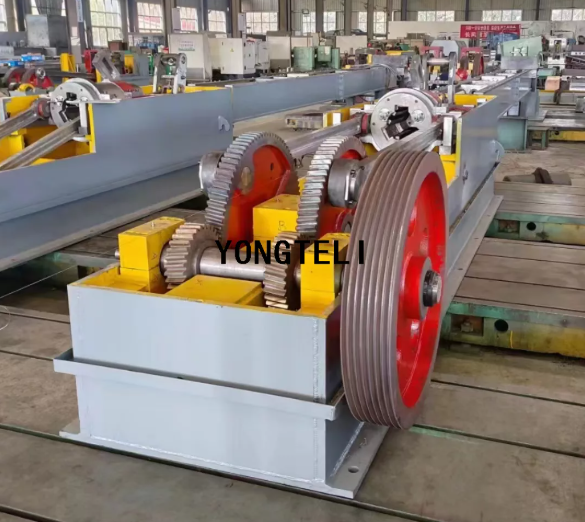
Cold drawing requires specialized equipment to achieve the desired precision and surface quality. The key components of cold drawing machines include:
● Die: The die is the tool that shapes the material as it is drawn through. It must be precisely engineered to ensure the material is formed to the correct dimensions.
● Drawing Bench: The drawing bench is used to apply the pulling force necessary to draw the material through the die.
● Lubrication System: Lubrication is crucial in reducing friction between the material and the die, ensuring smooth movement and preventing damage to both the material and the machine.
Modern cold drawing machines are often automated, which improves consistency and reduces the chances of human error, leading to more reliable and higher-quality products.
Lubricants are an essential part of the cold drawing process. They reduce friction between the material and the die, which helps prevent surface damage and ensures a smooth finish. Lubrication also plays a role in extending the life of both the die and the drawing machine by reducing wear and tear. Different types of lubricants are used depending on the material being drawn and the specific requirements of the process.
Component | Description |
Die | Tool that shapes the material as it passes through |
Drawing Bench | Applies the pulling force necessary to draw the material |
Lubrication System | Reduces friction, ensures smooth drawing and extends tool life |
Automation System | Ensures precise control and consistency in production |
Cold drawing is widely used in the automotive, aerospace, and construction industries to create high-precision parts. In the automotive industry, cold-drawn steel is used for components like axles, shafts, and other structural parts that require high strength and durability. In aerospace, cold-drawn materials are used in the construction of lightweight but strong components that must withstand extreme stresses and temperatures.
Common products made through the cold drawing process include:
● Cold-Drawn Steel: Used for making durable components such as axles, shafts, and gears.
● Cold-Drawn Copper Wires: Essential for electrical transmission in a variety of industries.
● Cold-Drawn Tubing: Used in the construction of pipes and in applications requiring high-performance, such as hydraulic systems.
Cold-drawn products offer superior strength, precision, and surface finish, making them essential in many high-performance applications.
The advancement of automated cold drawing machines has significantly improved the efficiency, accuracy, and consistency of the cold drawing process. These machines are equipped with advanced control systems that allow for precise adjustments to the drawing parameters, resulting in higher-quality products and reduced chances of defects. Automation also reduces the need for manual labor, minimizes errors, and improves safety in the workplace.
Ongoing research and development in the cold drawing industry have led to the creation of new materials specifically designed for the process. These materials offer improved strength, flexibility, and resistance to wear and corrosion. Additionally, advancements in surface finish techniques, such as polishing and coating, have improved the overall appearance and performance of cold-drawn products, making them more durable and resistant to corrosion.
Cold drawing is an indispensable manufacturing process that enhances the strength, precision, and surface quality of materials. By performing this process at room temperature, manufacturers can create high-performance components with exceptional mechanical properties.
As technology and material science advance, cold drawing remains crucial in producing high-precision components. With companies like Jiangsu Yongteli Machinery Co., Ltd., which specializes in cold drawing machines, manufacturers can achieve reliable, high-quality results in their production processes. Their products, such as cold drawing machines, offer advanced solutions for industries requiring top-notch performance and durability.
A: Cold drawing is a metalworking process where materials are drawn through a die at room temperature, improving strength, hardness, and surface finish.
A: Cold drawing is also known as "cold forming" or "cold pulling," especially when used for shaping materials like wire or rods.
A: A cold drawing machine pulls material through a precisely shaped die, reducing its cross-sectional area and increasing its length while enhancing its mechanical properties.
A: Cold drawing is used to achieve high precision, stronger materials, and better surface finishes, which are critical in industries like aerospace and automotive.
A: Materials like steel, copper, and aluminum are commonly used in cold drawing, as they offer the strength and ductility needed for the process.
A: Cold drawing machines provide greater precision, better material strength, and improved surface finish, making them ideal for producing high-performance components.


