
Views: 0 Author: Site Editor Publish Time: 2025-10-22 Origin: Site


Have you ever wondered why cold drawn steel is so highly valued in industries requiring strength and precision? This unique process, where steel is pulled through a die at room temperature using a cold drawing machine, enhances the material’s properties.
In this article, we will explore how cold drawing improves steel’s strength. We’ll also compare it to hot rolled and cold rolled steel, highlighting its advantages and key applications.
Cold drawing is a process where a metal, typically steel, is pulled through a die at room temperature. Unlike other methods such as hot drawing, which involves heating the metal to make it malleable, cold drawing occurs at temperatures below the recrystallization point of the material. The steel is lubricated and passed through a series of progressively smaller dies. Each pass reduces the diameter while increasing the length of the material. This process not only shapes the steel but also refines its internal grain structure, resulting in improved mechanical properties such as strength, hardness, and surface finish.
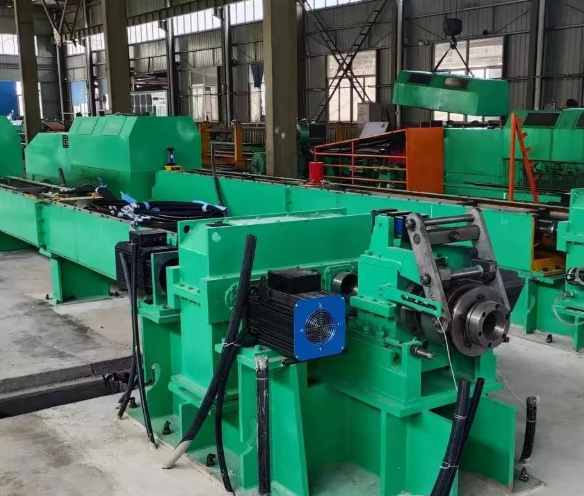
Cold drawing uses a cold drawing machine, which consists of several key components including a die, lubrication system, and drawing bench. The machine's precision is essential for ensuring the desired material properties and dimensions are achieved. The cold drawing process allows manufacturers to produce high-quality, precise steel products, ensuring they meet the requirements of demanding applications.
Cold drawn steel offers several key advantages that make it a preferred choice for high-performance applications:
● Enhanced Strength: Cold drawing increases the tensile strength of steel by refining its grain structure. This makes it significantly stronger than hot rolled or cold rolled steel. The cold drawing process also introduces work hardening, which further enhances the material’s strength.
● Improved Surface Finish: Cold drawing produces a smooth, polished surface, making it ideal for applications where appearance and smoothness are important. The process minimizes the surface imperfections found in hot rolled steel, resulting in a superior finish.
● Dimensional Precision: The process allows for tight tolerances and high accuracy, making cold drawn steel perfect for parts that require precise dimensions. It also improves straightness and consistency, which is essential in high-precision applications.
Cold drawn steel is commonly used in industries like aerospace, automotive, and manufacturing, where strength, durability, and precision are critical.
Hot rolled steel is processed at high temperatures, typically above 1700°F (927°C). In this state, steel is malleable, allowing it to be shaped into large sheets, bars, or structural components. However, the cooling process after rolling leads to a rough, uneven finish, and its mechanical properties are not as refined as cold drawn steel. The lack of control over dimensions and surface finish makes hot rolled steel less ideal for precision applications.
In contrast, cold drawing occurs at room temperature, providing more control over the material's mechanical properties and dimensions. This results in steel with better tensile strength, tighter tolerances, and superior surface finishes. Cold drawn steel has fewer imperfections and a more consistent structure, which leads to a stronger and more reliable material.
When comparing mechanical properties, cold drawn steel stands out due to its enhanced strength and hardness. Cold drawn steel undergoes plastic deformation during the drawing process, which increases its resistance to deformation. The refining of the steel’s grain structure also contributes to its improved durability and long-term performance.
● Tensile Strength: Cold drawn steel is stronger than hot rolled steel because it has a more refined grain structure and higher tensile strength. The process of cold drawing increases the steel’s ability to withstand higher forces before breaking.
● Surface Finish: Cold drawn steel offers a smoother finish compared to the rough, mill-scaled surface of hot rolled steel. This makes cold drawn steel ideal for applications where appearance matters and a polished surface is necessary.
● Ductility: While cold drawn steel is stronger, it may be slightly less ductile than hot rolled steel due to the cold working process. Cold drawn steel is less able to deform plastically, making it more prone to brittle failure under certain conditions.
Property | Cold Drawn Steel | Hot Rolled Steel |
Tensile Strength | Higher due to refined grain structure | Lower, less resistance to deformation |
Surface Finish | Smooth, polished finish | Rough, mill-scaled finish |
Ductility | Lower, more brittle | Higher, more flexible |
Precision | Tight tolerances, high accuracy | Lower precision |
Both cold rolled and cold drawn steel are processed at room temperature, but the methods differ significantly. Cold rolled steel is produced by passing hot rolled steel through a pair of rollers to reduce its thickness and improve its surface finish. However, the process is more limited in terms of strength enhancement, as the metal is not drawn through a die to refine its structure.
On the other hand, cold drawn steel goes through multiple stages of drawing, where it is passed through a series of progressively smaller dies. This process not only reduces the diameter of the steel but also improves its strength and hardness by altering the material's internal structure. Cold drawn steel undergoes a greater degree of deformation, leading to a more refined microstructure that provides improved mechanical properties.
Cold drawn steel outperforms cold rolled steel in terms of strength and durability. The additional drawing steps in the cold drawing process result in enhanced mechanical properties, including:
● Higher Tensile Strength: Cold drawn steel can withstand higher forces before breaking, making it ideal for heavy-duty applications that require maximum strength.
● Improved Fatigue Resistance: Cold drawn steel has better resistance to fatigue and can endure repeated stress cycles without failure, making it a better choice for parts that experience constant loading and unloading.
● Increased Durability: The grain refinement achieved through cold drawing leads to a more durable material, ideal for use in demanding environments where longevity is critical.
Cold drawn steel is commonly used in industries where strength and reliability are paramount, such as aerospace, automotive, and manufacturing.
Feature | Cold Drawn Steel | Cold Rolled Steel |
Process | Drawn through progressively smaller dies at room temperature | Rolled through a set of rollers at room temperature |
Strength | Higher tensile strength, refined grain structure | Moderate strength, less refined structure |
Surface Finish | Smoother, more polished | Smoother but less consistent |
Dimensional Tolerances | Tight tolerances, high accuracy | Moderate tolerances |
Applications | Aerospace, automotive, high-precision manufacturing | Light gauge materials, applications requiring medium strength |
Cold drawing significantly enhances the tensile strength of steel by refining its microstructure. The process compresses the material, causing its grains to realign and compact, which improves the steel's ability to resist deformation under stress. Cold drawn steel can have a tensile strength increase of 50-90%, depending on the material and the number of passes through the die.
This increase in strength makes cold drawn steel the preferred choice in applications that demand high strength, such as in structural components, shafts, and axles. The improvement in strength also ensures that cold drawn steel can handle heavy loads without compromising its integrity.
Advantage | Description |
Increased Strength | Refines grain structure, increasing tensile strength by 50-90% |
Dimensional Precision | Tight tolerances, ideal for high-precision applications |
Improved Surface Finish | Polished and smooth finish, reducing surface imperfections |
Durability | Enhanced fatigue resistance and longer service life |
Cold drawing allows for extremely tight dimensional tolerances, meaning the final product is highly accurate in terms of size and shape. The process is ideal for applications where precision is critical, such as in the production of automotive components, precision machinery parts, and aerospace components.
The cold drawing process also results in improved straightness and consistency, making it a better option for parts that require uniformity in shape and size. This level of precision reduces the need for further machining or finishing processes, saving time and cost.
Cold drawn steel’s superior strength and durability make it highly suitable for industries such as:
● Aerospace: Components like landing gear, shafts, and structural elements require the strength and precision that cold drawn steel provides.
● Automotive: Cold drawn steel is used in manufacturing parts like axles, drive shafts, and suspension components, where strength and performance are essential.
● Manufacturing: Industrial machines, heavy-duty equipment, and structural components rely on cold drawn steel for its robustness and reliability. The precise dimensions and high strength allow these components to perform under extreme conditions.
Cold drawn steel is also widely used in the construction industry, where its strength is essential for reinforcing bars and structural supports that must withstand heavy loads and environmental stresses.
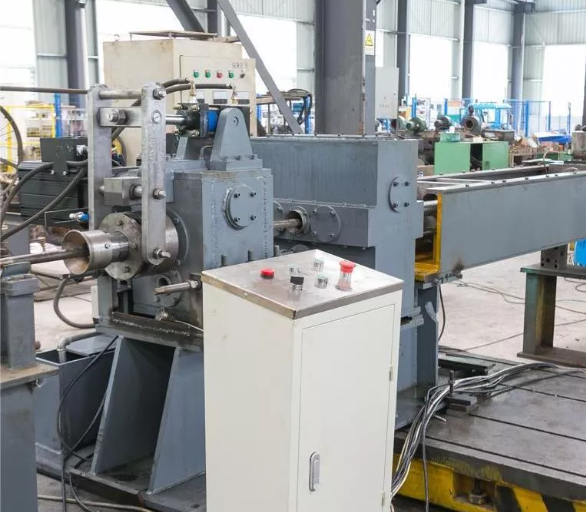
The cold drawing process can be more time-consuming and costly compared to hot rolling and cold rolling. Multiple passes through the dies are often required, which can lead to increased labor, energy, and equipment usage. However, these costs are justified by the superior mechanical properties and dimensional accuracy of the final product.
While cold drawn steel is more expensive than other types of steel, the enhanced strength, durability, and precision make it well worth the investment in industries where these properties are crucial. The additional production time also ensures the production of high-quality, reliable components that perform well in demanding applications.
While cold drawing improves the strength of steel, it can also make the material less ductile. Cold drawn steel is more prone to brittle failure under certain conditions, especially when subjected to sharp impacts or extreme bending. It's crucial to balance the strength requirements with ductility considerations when choosing cold drawn steel for an application. For applications that require both strength and flexibility, alternative materials or heat treatments may be necessary to improve ductility.
Cold drawn steel is stronger than hot rolled and cold rolled steel due to its refined grain structure and improved tensile strength. The cold drawing process enhances its mechanical properties, making it ideal for high-strength applications. Although it comes with higher costs and longer production times, the benefits in performance and quality are unmatched. Cold drawn steel is particularly valuable in industries such as aerospace, automotive, and manufacturing, where strength and precision are critical.For projects requiring high-strength materials with tight dimensional tolerances, cold drawn steel should be your material of choice. Ensure you utilize a cold drawing machine that provides consistent, precise results for optimal performance.
Jiangsu Yongteli Machinery Co., Ltd. provides high-quality cold drawing machines that offer exceptional precision and efficiency for your production needs.
A: Cold drawn steel is steel that has been drawn through a die at room temperature to improve its strength, hardness, and dimensional precision.
A: A cold drawing machine pulls steel through a die, reducing its diameter and refining its internal structure, resulting in enhanced mechanical properties.
A: Cold drawn steel has a more refined grain structure, which gives it higher tensile strength and better durability than hot rolled steel.
A: A cold drawing machine provides precise control over the material's dimensions and improves strength, making it ideal for high-precision applications.
A: Yes, cold drawn steel is more costly due to the extra processing steps, but it offers better mechanical properties and precision.


