
Views: 0 Author: Site Editor Publish Time: 2025-10-21 Origin: Site


Cold drawing is a crucial process in industries like automotive, aerospace, and medical manufacturing. It enhances material strength and precision at room temperature. As manufacturers strive to improve efficiency, the question arises: can cold drawing be automated?
In this article, we will explore the benefits and challenges of automating cold drawing. You’ll understand how cold drawing machines could transform production, while also recognizing the limitations that still exist.
Cold drawing is a process where metal, typically in the form of rods, wires, or tubes, is pulled through a die to reduce its cross-sectional area. The metal is drawn at room temperature, which helps enhance its strength and hardness, as well as improve its surface finish and dimensional accuracy. Materials such as steel, copper, and aluminum are commonly used due to their ability to withstand the stresses of the process.
The process begins with a raw material, often lubricated to reduce friction, being pulled through a die. The die determines the final shape and size of the material. As the material passes through, it undergoes deformation, which refines its grain structure and improves its mechanical properties, such as tensile strength and hardness. The ability to control these properties with such precision makes cold drawing a valuable technique in industries where performance and reliability are crucial.
Cold drawing is favored for its ability to produce components with very tight tolerances, making it essential in industries where precision is critical. The process also improves the material's surface finish, which is important in sectors like electronics, medical devices, and automotive parts. The material becomes stronger and harder, which enhances its overall durability and makes it suitable for demanding applications.
Key characteristics of cold drawing include:
● Enhanced Strength: The process significantly increases the tensile strength of the material, making it more durable and resistant to wear.
● Improved Surface Finish: Cold drawing smooths the surface, reducing the need for additional processing, such as polishing or coating.
● Dimensional Precision: Cold drawing achieves tight tolerances, making it ideal for components that require exact measurements, such as wires, rods, and tubes.
These characteristics are essential for producing parts that must meet strict quality standards. Whether it’s for structural components or intricate medical devices, the cold drawing process plays a key role in ensuring the material performs as expected in its final application.
While cold drawing has its advantages, it also comes with challenges. The process requires significant manual labor, specialized expertise, and quality control. Scaling up production can be difficult, as each drawing pass takes time, and handling materials can be cumbersome. Additionally, manual intervention is often required to adjust the drawing parameters and handle different materials, which can lead to inconsistencies and potential errors.
The need for constant monitoring and adjustments means that the traditional cold drawing process can be slow and prone to variations, especially when handling complex shapes or high volumes of material. To address these issues, automation has been introduced as a potential solution, streamlining the process and reducing human error.
Feature | Cold Drawing | Hot Drawing | Plastic Drawing |
Temperature | Room temperature | High temperature | Room or slightly higher temperature |
Surface Finish | High-quality surface finish | Less precise, rough surface | Smooth finish for polymers |
Dimensional Precision | Very tight tolerances | Less precise | Varies based on material |
Material Strength | Improved tensile strength | Softer material | Suitable for polymers, not metals |
Applications | Aerospace, automotive, medical | Large parts, basic shapes | Polymers and plastics |
Automation in cold drawing involves the integration of automated machines and systems designed to streamline the process. One example is the cold drawing machine, which is equipped with advanced controls to manage the drawing process without the need for constant manual oversight.
A typical automated cold drawing setup includes components like:
● Drawbenches: Machines that pull the material through the die with precise control over speed and force. These machines are capable of maintaining a consistent drawing speed, which is essential for ensuring uniformity in the finished product.
● Hydraulic Systems: Used for applying the necessary pulling force on the material. These systems ensure that the material is drawn with the right amount of tension, minimizing the risk of deformation or failure.
● PLC Controls: Programmable logic controllers that allow for real-time adjustments and monitoring of the drawing process. These systems make it easier to optimize the drawing parameters for different materials and part specifications.
These systems are designed to work in sync, allowing for continuous production without interruptions. Automated cold drawing machines improve the consistency and quality of the output by reducing human error and ensuring that each part is drawn to exact specifications. This results in higher productivity and a reduction in material waste.
Automating cold drawing provides numerous advantages, including:
● Increased Production Speed: Automation speeds up the drawing process, allowing for faster production and higher output. By reducing the need for manual intervention, production time can be significantly reduced, enabling manufacturers to meet high demand with minimal delays.
● Consistent Quality: Automated systems ensure uniformity, producing components with tighter dimensional tolerances and smoother surfaces. This consistency is particularly important in industries that require high-quality standards, such as aerospace and medical device manufacturing.
● Reduced Labor Costs: With automation, the need for manual intervention is reduced, lowering labor costs and minimizing errors. The process becomes more efficient, and fewer workers are needed to operate and monitor the machines, making it a cost-effective solution in the long run.
● Higher Precision: Automated systems can adjust drawing parameters in real-time, ensuring that each part meets the desired specifications without the inconsistencies found in manual processes. This level of precision is difficult to achieve with human labor alone.
Benefit | Explanation |
Increased Production Speed | Automation speeds up drawing, allowing higher output with fewer delays. |
Consistent Quality | Ensures uniformity in dimensional tolerances and surface finish. |
Reduced Labor Costs | Lower dependency on manual labor, cutting down operational costs. |
Higher Precision | Real-time adjustments improve accuracy, minimizing human errors. |
Modern cold drawing machines leverage several technologies that make automation possible. These include:
● Advanced Die Technology: Modern dies are engineered for high precision, enabling tighter tolerances and smoother surfaces. The dies are also more durable, reducing the need for frequent replacements and maintenance.
● Lubrication Systems: Automatic lubrication systems ensure that friction is minimized during the drawing process, preventing material damage and enhancing the surface finish. Proper lubrication also helps to extend the life of both the die and the cold drawing machine.
● Automated Control Systems: These systems monitor every aspect of the process, adjusting speed, force, and other parameters to optimize the results. Real-time monitoring ensures that any potential issues are addressed immediately, improving the overall efficiency of the operation.
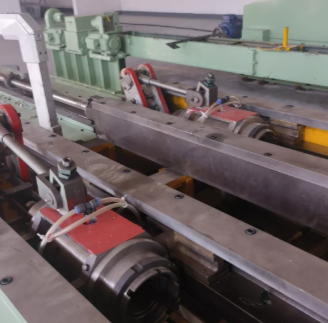
Cold drawing machines vary based on the type of material and shape being produced. There are single-pass machines for simple shapes and multi-pass machines for more complex forms.
● Single-Pass Machines: Used for drawing simple shapes like wires and bars, where the material is drawn through a die in one pass. This process is faster and more straightforward but is limited in terms of the complexity of shapes it can produce.
● Multi-Pass Machines: These machines are used for more intricate designs, where the material must pass through several dies to achieve the desired final shape and size. Multi-pass machines are more flexible, allowing for the creation of more complex geometries.
The choice of machine depends on the complexity of the product and the material being drawn. Some materials, such as steel, require multiple passes to achieve the desired properties and dimensions.
While automation offers many advantages, it cannot fully replace manual control in all cold drawing processes. Some of the limitations include:
● Material Complexity: Certain materials are more challenging to automate, especially those that are brittle or require specialized drawing techniques. For example, materials that are highly sensitive to temperature changes or require precise control over the drawing speed may still require manual oversight.
● Large Diameters and Custom Shapes: Drawing larger diameters or custom shapes often requires adjustments that may still need manual intervention. Automation is more efficient when dealing with standard shapes and sizes, but it can struggle with more complex, custom designs.
● Maintenance: Automated cold drawing machines require regular maintenance to ensure that all components are functioning correctly. This can involve specialized technical expertise and preventive measures to avoid downtime and maintain machine performance.
The initial investment in automated cold drawing machines can be significant, as they require high-quality components and advanced technology. However, over time, the cost benefits are clear.
● Initial Costs: Automated systems tend to have a high upfront cost due to the complexity of the machinery and installation. However, many companies find that the long-term savings outweigh the initial investment.
● Long-Term Savings: Automation reduces labor costs, increases production efficiency, and minimizes errors, leading to substantial savings in the long run. Over time, the ability to produce more parts in less time translates into higher profits and a competitive edge in the market.
Businesses need to evaluate their production needs and consider the potential return on investment when deciding whether to automate their cold drawing processes.
The automotive industry relies heavily on cold drawing to produce components like shafts, rods, and gears. Automation enhances production efficiency, allowing manufacturers to produce high volumes of precision parts while ensuring consistent quality. In the automotive sector, where safety and performance are critical, the need for automated processes that ensure exact tolerances is paramount.
In aerospace and defense, the precision and durability of components are critical. Cold drawing, especially when automated, allows for the production of high-strength materials that meet stringent requirements for performance and safety. Automated cold drawing machines ensure the consistency and reliability of components used in aircraft, satellites, and defense equipment.
Medical devices and electronics often require components with exacting standards for dimensional accuracy and surface finish. Automated cold drawing ensures that these materials meet the necessary mechanical properties, making them suitable for applications such as surgical tools, wiring, and structural components. The consistency achieved through automation is vital in these industries, where any deviation can have serious consequences.
The future of cold drawing automation looks promising, with ongoing advancements in machine technology. The integration of IoT-enabled monitoring and predictive maintenance is improving machine uptime and efficiency. Additionally, innovations in die and lubrication technology are making the process even more precise and cost-effective. As these technologies continue to evolve, the automation of cold drawing will become more accessible and efficient.
Despite the advancements, several challenges remain. Materials with varying properties still pose a challenge to full automation. Moreover, large-scale adoption requires overcoming technical hurdles like tooling complexity and variability in material behavior. Training and re-skilling the workforce for automated environments will also be crucial for widespread adoption.
As technology evolves, automation in cold drawing is likely to become more widespread. The benefits of increased efficiency, precision, and cost savings will drive the adoption of automated systems in more industries, leading to a revolution in manufacturing processes. In the next 5-10 years, we may see automation becoming the standard across many sectors, improving both the quality and quantity of cold-drawn components.
Cold drawing can be automated, offering clear benefits like improved efficiency, quality, and cost-effectiveness. Automation is transforming industries reliant on this process, enhancing consistency and precision. Despite some challenges, the future of cold drawing automation is promising. As technology advances, more industries will adopt automation to stay competitive.
Automated cold drawing machines, like those offered by Jiangsu Yongteli Machinery Co., Ltd., provide unique advantages in precision and efficiency, helping manufacturers enhance their production capabilities and stay ahead in the global market.
A: Cold drawing is a manufacturing process where metal is pulled through a die at room temperature to reduce its size and improve its strength. It is commonly used for precision parts in industries like automotive and aerospace.
A: Yes, cold drawing machines can be automated. Automated systems help increase production efficiency, improve consistency, and reduce labor costs, making the process faster and more precise.
A: Automation in cold drawing improves speed, precision, and consistency while reducing labor costs and errors, making it ideal for high-volume production.
A: A cold drawing machine pulls metal through a die, reducing its diameter while improving its surface finish and mechanical properties. It uses hydraulic systems and PLC controls to ensure precise drawing.
A: Industries like automotive, aerospace, and medical manufacturing use cold drawing machines to create components with high strength, precision, and tight tolerances.


