
Views: 0 Author: Site Editor Publish Time: 2025-10-20 Origin: Site


Did you know that precision and strength are often the deciding factors in industries like aerospace or automotive? Cold drawn tubes are critical in these fields.
In this article, we will explore what a cold drawn tube is and how it differs from other tube manufacturing processes. You’ll also learn how cold drawing machines play a vital role in achieving superior results.
Cold drawing is a specialized manufacturing process used to shape materials like metal tubes at room temperature. This method involves pulling a material through a precisely shaped die, which reduces its cross-sectional area and increases its length. Unlike other processes, such as hot drawing, cold drawing does not require heating the material, which brings several advantages, including increased strength, better surface quality, and enhanced dimensional accuracy.
The key characteristic of cold drawn tubes is that they maintain the properties of the raw material while achieving high precision. This process refines the metal's grain structure, resulting in improved strength, hardness, and surface finish. Cold drawn tubes are commonly used across a range of industries that require high-performance and reliability, such as aerospace, automotive, and medical fields.
Cold drawn tubes are highly valuable in sectors where performance, precision, and durability are paramount. These industries, such as automotive, aerospace, and medical, often rely on components that must meet extremely tight tolerances and perform under challenging conditions. The cold drawing process allows manufacturers to create tubes with exceptional mechanical strength, superior surface quality, and tight dimensional tolerances. This ensures that the products produced from these tubes can withstand stress, pressure, and wear without failure.
Cold drawn tubes are particularly important when precise and smooth tubes are required, which is often the case in applications like hydraulic cylinders, medical devices, and structural components in aircraft. The ability to achieve the necessary mechanical properties at room temperature without compromising the integrity of the material makes cold drawn tubes an ideal choice for many demanding applications.
Cold drawing is a process that involves shaping metal materials, such as tubes, by pulling them through a die. This process is performed at room temperature, which differentiates it from hot drawing, where the material is heated before being drawn through the die. The key benefit of cold drawing is the improvement in the material’s mechanical properties, including an increase in strength, hardness, and a smoother finish.
The cold drawing process starts with a raw material, such as a metal rod or tube, which is then lubricated to reduce friction during the drawing process. After lubrication, the material is drawn through the die, where its diameter is reduced, and its length increases. The drawing action aligns the material's grain structure, improving its mechanical properties and performance.
The cold drawing process for tubes begins with the preparation of the material. The metal is usually a rod or tube that is cut to the required length and lubricated to ensure smooth drawing through the die. The material is then pulled through the die, where the cross-sectional area of the tube is reduced, and the length of the tube increases. This elongation enhances the material’s strength and hardness, improving its overall durability.
The cold drawing machine plays a crucial role in ensuring that the process runs smoothly and consistently. These machines apply precise and controlled tension to the material, ensuring that it passes through the die at the correct rate and with the necessary force. The machine’s role is critical to ensuring that the tubes achieve the desired dimensions and mechanical properties.
Cold drawing stands out as a superior method compared to other tube manufacturing processes like hot drawing or extrusion. Hot drawing involves heating the material to a red-hot temperature, making it more pliable for drawing. However, this heating process can lead to reduced dimensional accuracy and surface quality. Cold drawing, on the other hand, takes place at room temperature, ensuring that the material retains its original structure and exhibits superior strength, surface finish, and dimensional tolerance.
Another common method of shaping metal tubes is extrusion, which pushes the material through a die rather than pulling it, as in cold drawing. While extrusion is often used for producing larger quantities of tubes, cold drawing offers more control over the final product’s dimensions and surface quality. Cold drawn tubes also offer tighter tolerances and better mechanical properties, making them a preferred choice in high-precision industries.
Feature | Cold Drawing | Hot Drawing | Extrusion |
Temperature | Room temperature | High temperature (heated metal) | Room temperature or slightly heated |
Dimensional Accuracy | High precision | Less precise due to heat | Moderate precision |
Surface Finish | Smooth, polished finish | Less smooth due to oxidation | Varies, may require additional finishing |
Strength | High strength, increased tensile strength | Reduced strength due to heating | Moderate strength |
Common Applications | Aerospace, automotive, medical | Heavy-duty applications, steel shaping | Large quantities, general tubing |
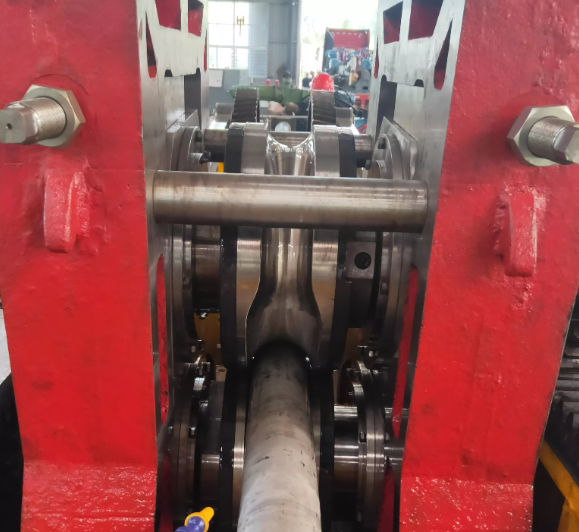
Cold drawn tubes are known for their exceptional dimensional accuracy. The precise control during the cold drawing process ensures that the tubes maintain tight tolerances, which is essential in industries where even the smallest deviation can affect performance. This level of precision is especially critical in applications where parts must fit together seamlessly, such as in automotive manufacturing or in medical devices, where reliability is non-negotiable.
Unlike other processes, such as hot drawing, which can result in variations in the material’s size, cold drawing ensures that the final tube meets the specified dimensions with minimal deviation. This accuracy contributes to the overall quality and functionality of the end product, making cold drawn tubes ideal for high-performance applications.
Cold drawing enhances the mechanical properties of metal tubes, making them stronger and more durable than materials processed by other methods. The drawing process increases the material's tensile strength, which makes it more resistant to deformation under stress. Cold drawn tubes are particularly valuable in applications where the material must withstand high loads or pressure, such as in hydraulic systems or structural components in buildings and bridges.
Cold drawing also improves the hardness of the material, making it more resistant to wear and tear. However, the process also reduces the material’s ductility, meaning the tubes become more rigid and less flexible. While this can be advantageous in many high-performance applications, some materials may require post-processing, such as annealing, to restore some ductility if needed.
Cold drawing significantly improves the surface finish of the material. As the tube is drawn through the die, any surface imperfections are smoothed out, resulting in a polished and uniform appearance. The friction between the die and the material removes oxidation and impurities, leaving a clean surface that is ideal for applications requiring a smooth finish.
A smooth surface finish is particularly important in industries such as medical devices, where tubes must be free from defects to prevent contamination or irritation. Cold drawn tubes are also more resistant to corrosion due to the improved surface quality, which adds to their longevity and durability in harsh environments.
Cold drawing can be applied to a wide range of metals, with steel being the most commonly used material due to its strength and versatility. Steel can be drawn into tubes with excellent mechanical properties, making it suitable for applications in industries like automotive, aerospace, and construction. Other metals commonly cold drawn include aluminum and copper, which are used for their lightweight properties and excellent conductivity, respectively.
Steel alloys, such as stainless steel and high-carbon steel, are often selected for cold drawing due to their superior strength and durability. These materials can handle the stress of the drawing process while maintaining their mechanical properties, ensuring that the final tubes are strong and reliable.
The selection of material for cold drawn tubes depends on the specific requirements of the application. For example, aluminum is often chosen for aerospace applications due to its lightweight nature and resistance to corrosion. Steel, on the other hand, is preferred for automotive parts, such as axles and suspension components, where strength and toughness are critical.
Material properties such as tensile strength, hardness, and corrosion resistance are key factors when selecting the right material for cold drawing. For applications that require high tensile strength, steel alloys are commonly used. For applications that need resistance to corrosion or lightweight materials, aluminum and copper alloys are more appropriate.
The material's properties greatly influence the cold drawing process. Materials with high tensile strength, such as stainless steel, are ideal for cold drawing because they can withstand the forces applied during the process without breaking. Materials with lower tensile strength, on the other hand, may need to undergo additional processes, such as annealing, to improve their formability and to prevent cracking or failure during drawing.
The ductility and hardness of the material also play important roles in how it behaves during cold drawing. Materials with higher ductility can withstand more elongation without breaking, while materials with higher hardness require more controlled processes to prevent surface defects or cracking.
Material Property | Stainless Steel | High-Carbon Steel | Aluminum Alloy | Copper |
Tensile Strength | High | Very High | Moderate | Low |
Ductility | Moderate | Low | High | High |
Hardness | High | Very High | Moderate | Moderate |
Corrosion Resistance | Excellent | Poor | Good | Excellent |
Best Applications | Aerospace, Medical | Heavy-duty, Automotive | Aerospace, Automotive | Electrical, Plumbing |
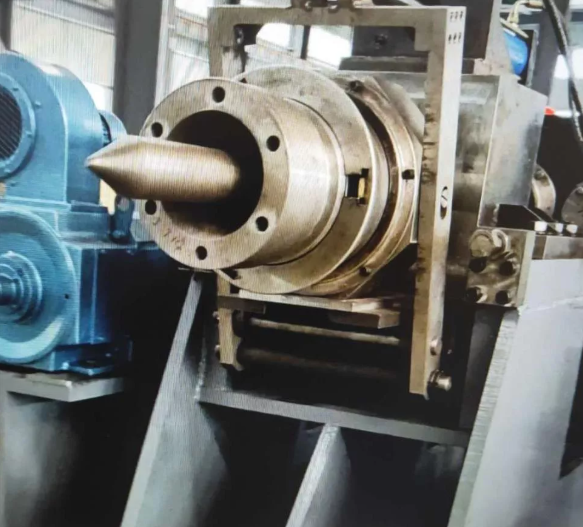
In the automotive industry, cold drawn tubes are essential for producing high-strength components like axles, chassis, and suspension parts. The exceptional dimensional accuracy and mechanical strength of cold drawn tubes make them ideal for parts that need to perform under high stress and pressure. Cold drawn tubes are also used in manufacturing hydraulic components, such as rods and cylinders, which require high strength and resistance to wear.
Cold drawn tubes are used extensively in aerospace applications for components that must meet strict performance and weight requirements. For example, aircraft frames and landing gear often rely on cold drawn tubes due to their strength-to-weight ratio. The precision and durability of cold drawn tubes ensure that critical parts in the aviation industry are both lightweight and capable of withstanding extreme conditions.
In the oil and gas industry, cold drawn tubes are widely used for high-pressure applications, such as pipelines, fittings, and valves. The strength and resistance to corrosion provided by cold drawn tubes make them an ideal choice for environments where durability and reliability are essential. Cold drawn tubes are commonly used in offshore platforms, drilling equipment, and pipelines that must withstand harsh conditions.
Cold drawn tubes are essential in the production of medical devices such as catheters, surgical instruments, and other precision components. The ability to produce tubes with high dimensional accuracy and a smooth surface finish makes cold drawn tubes ideal for use in the medical field. Similarly, industrial equipment such as hydraulic cylinders and machine components benefit from the strength and durability of cold drawn tubes.
Industry | Key Applications |
Automotive | Axles, chassis, suspension parts |
Aerospace | Aircraft frames, landing gear, hydraulic systems |
Oil and Gas | Pipelines, valves, fittings |
Medical | Catheters, surgical instruments, medical devices |
Industrial Equipment | Hydraulic cylinders, machine components |
Cold drawn tubes are known for their exceptional strength and durability. The cold drawing process increases the material's tensile strength, making the tubes more resistant to deformation under stress. This makes them ideal for use in industries where parts must withstand heavy loads or pressure without failing.
Although cold drawing can be more expensive than other manufacturing methods due to its precision and the need for specialized equipment, the long-term benefits often outweigh the initial costs. Cold drawn tubes typically require less post-processing and fewer corrections, resulting in fewer defects and a more efficient production process in the long run.
Cold drawn tubes provide reliable performance in critical applications where precision and durability are required. The high mechanical strength, tight tolerances, and smooth surface finish of cold drawn tubes ensure that they meet the rigorous demands of industries like aerospace, automotive, and medical.
Cold drawing and cold rolling are both processes used to shape metal tubes, but they differ in their method and results. Cold drawing involves pulling the material through a die, reducing its diameter and increasing its length, while cold rolling compresses the material using rollers, reducing its thickness.
Cold drawing typically produces tubes with better dimensional precision, surface finish, and mechanical properties, making them ideal for high-performance applications. Cold rolled tubes, on the other hand, are produced more quickly and are better suited for applications that don’t require as high a level of precision.
While cold drawing offers superior precision, strength, and surface finish, it can be more costly and time-consuming than cold rolling. Cold rolled tubes are more economical and faster to produce but may not meet the tight tolerances or strength required for high-precision applications.
Cold drawn tubes play a critical role in industries like aerospace, automotive, medical, and industrial sectors. Their superior precision, strength, and surface quality make them ideal for high-performance applications. The cold drawing process enhances the material's mechanical properties, ensuring reliable and durable results.For industries requiring precise and durable components, cold drawn tubes are the best choice. Their ability to meet strict performance standards guarantees exceptional results in even the most demanding environments.
Cold drawn tubes from Jiangsu Yongteli Machinery Co., Ltd. offer unmatched value with their superior strength and precision. These products are designed to provide exceptional performance in various industries, ensuring reliability and durability.
A: A cold drawn tube is a metal tube that has been shaped by pulling it through a die at room temperature, enhancing its strength, precision, and surface finish.
A: A cold drawing machine pulls metal through a precisely sized die, reducing its diameter and increasing its length while improving the material’s mechanical properties.
A: Cold drawing increases the tensile strength of the material without heating it, resulting in a stronger and more durable tube compared to hot drawing.
A: Cold drawn tubes are used in automotive, aerospace, medical, and industrial sectors where high precision and strength are essential.
A: Yes, a cold drawing machine can handle various metals like steel, copper, and aluminum, adjusting to the material's specific properties during the drawing process.


